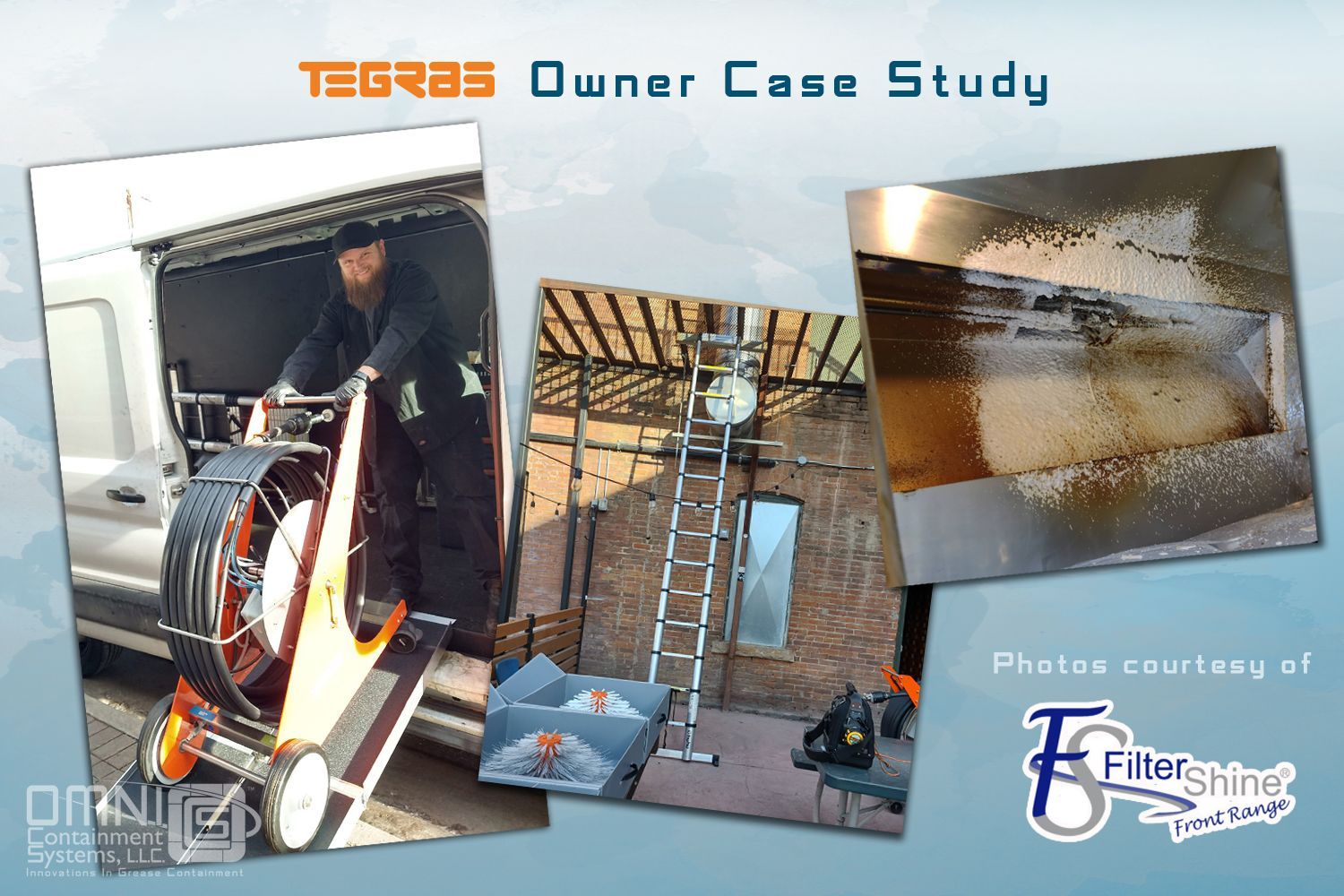
Tegras Owner Case Study
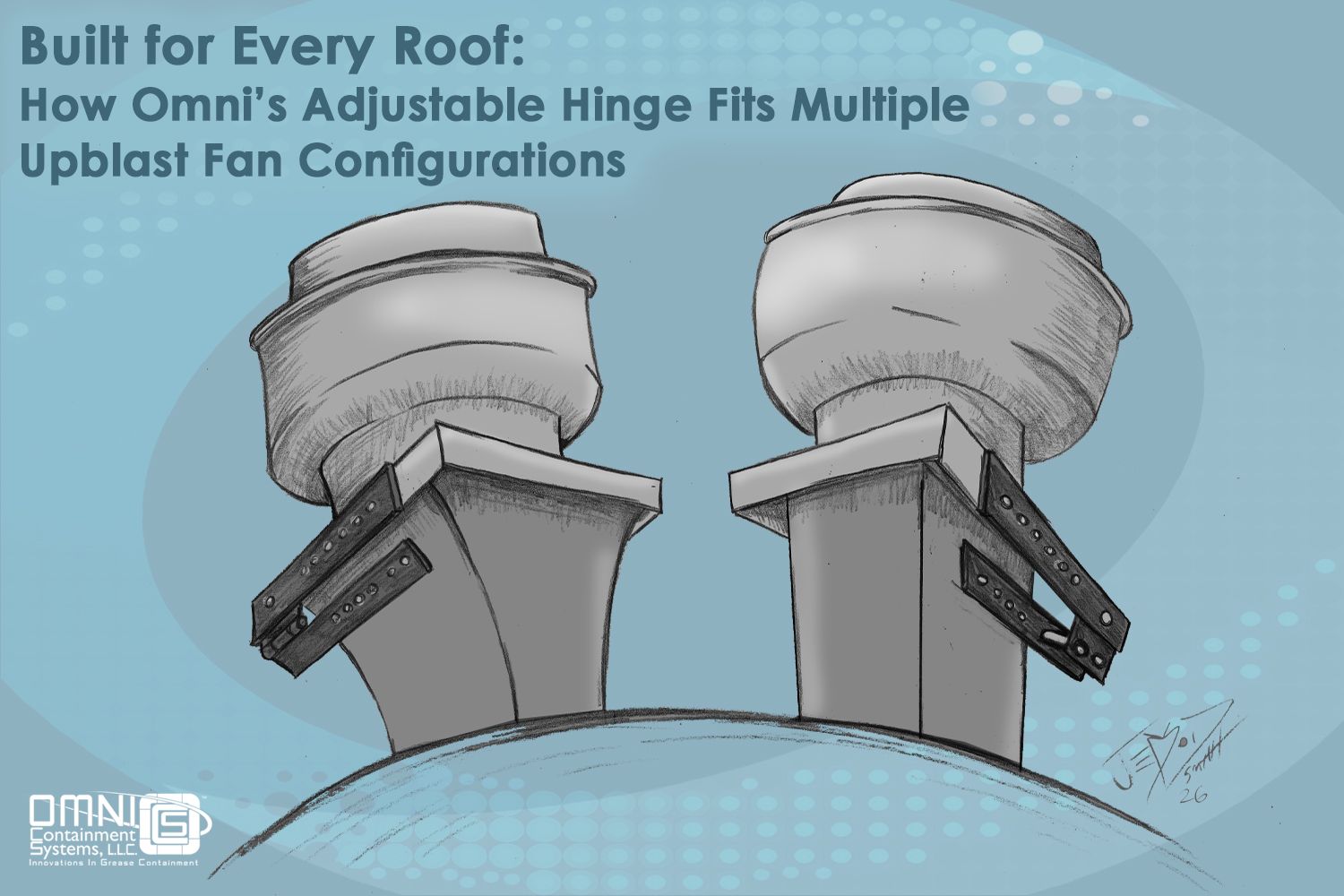
Place yourself in this scenario: You receive a job with a 35-foot vertical duct after a short lateral duct. The duct runs next to a three-story building with a fan on top of this “chimney” structure. There is no way to clean the duct from the top because there is no hinge on the fan, no safe working area, and it is obvious that few kitchen exhaust companies had even attempted to clean the fan bowl. In the 35 years of the restaurant being open, no kitchen exhaust cleaner had ever actually cleaned the ductwork. Sure, they cleaned the hood, and then every 5-7 years they brought in a crane to replace the fan due to mechanical issues from excess grease.
For complex systems like these, would your kitchen exhaust cleaning company be up to the task? Many previous KECs turned and walked away, but not Shayne Buckley with FilterShine Front Range. He has never shied away from complex jobs like these.
FilterShine Front Range performs a variety of kitchen exhaust system-related services for their customers in Colorado. Their KEC services focus on grease filter exchange, kitchen exhaust cleaning, system repairs, and upgrades. Shayne Buckley is a kitchen exhaust cleaning consultant who mentors numerous companies throughout the US through his “Systems of Success (S.O.S.)” program. Through their S.O.S. program, they have helped new and established hood cleaning companies dial in their processes to ensure fire safety and profitability. Twice per year, he hosts an in-person exhaust fan repair course in partnership with KEC Supplies for companies to expand their services for their customers.
Shayne Buckley with FilterShine Front Range has been a valuable partner and resource for Omni Containment Systems. When FilterShine Front Range became a Tegras owner about a year ago, we knew he would take the Tegras equipment and use it on every kind of system and configuration out there. We knew that through his field experience, we would receive valuable feedback on the Tegras equipment and its capabilities.
A common issue confronting many kitchen exhaust cleaners is the complexity of kitchen exhaust ductwork. FilterShine Front Range had one 5-hood system with 14 access panels along a long maze of connecting ductwork and a solid fuel cooking system with a total of 135 feet of lateral duct. These types of jobs require a lot of technicians and multiple ladder setups for maintenance cleanings. When a kitchen exhaust system has been neglected for years, restoring the system is an extremely difficult task and may require a full shutdown of the restaurant for at least a few days. For complex systems, chemical application requires a unique skill set that most companies and technicians have not yet acquired. Shayne Buckley of FilterShine states, “Most companies implement the ‘spray and pray’ technique – clean what you can and pray the system doesn’t catch fire.”
These types of problematic systems are what set FilterShine Front Range apart from the normal hood cleaners in their area; they spend the time needed to clean kitchen exhaust systems back to compliance, but the Tegras equipment made it so they do not dread this type of work anymore. They have been able to do the hard restorations with the Tegras equipment and have utilized the Tegras to make their maintenance cleanings more efficient. In fact, FilterShine Front Range reports that restaurants with a 24-hour operation only need to close for 8 hours overnight instead of 16 hours due to the prior cleaning methods.
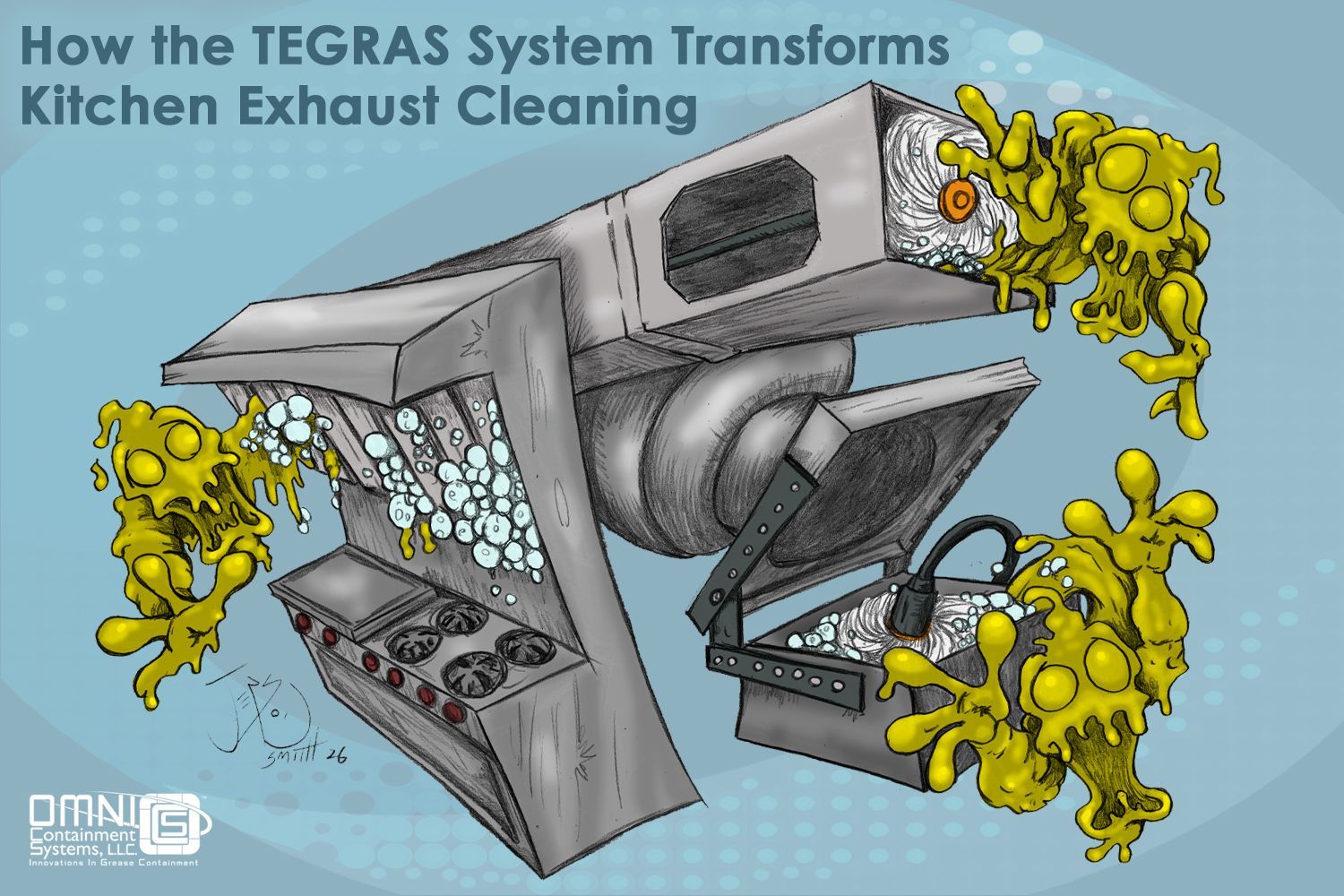
The Tegras Multipro, aka “the Robot,” has allowed FilterShine Front Range to reach long sections of lateral duct with fewer access points, apply chemicals evenly throughout the system, and use fewer technicians on the job. Shayne Buckley stated, “The foaming application with the iFoam alone has been worth the investment even on more traditional systems that had been neglected. The Robot brushing machine has made restorations possible in a single day with only two people onsite in most cases. And even though access panels are required at regular intervals along ductwork, unfortunately, many places have limited accessibility once their build-out is complete. With the Tegras System, we can still ensure cleaning compliance and fire safety where other companies are left to simply check the box that states, ‘inaccessible areas exist’ and leave those sections of ductwork virtually untouched.”
When we asked Shayne what he liked most about using the Tegras, he said, “The foam, without a doubt. The Comegras chemical has changed our entire operations process. It’s beautiful to see the shaving cream consistency melt the grease off the surfaces. Using that in conjunction with the brushing system allows for even chemical application without excessive dilution. I love that you can run the brushes with or without the foam or rinsing. It’s simple to apply the chemical, agitate with the brushes, and only rinse when you’re ready to do so. Game changer!”
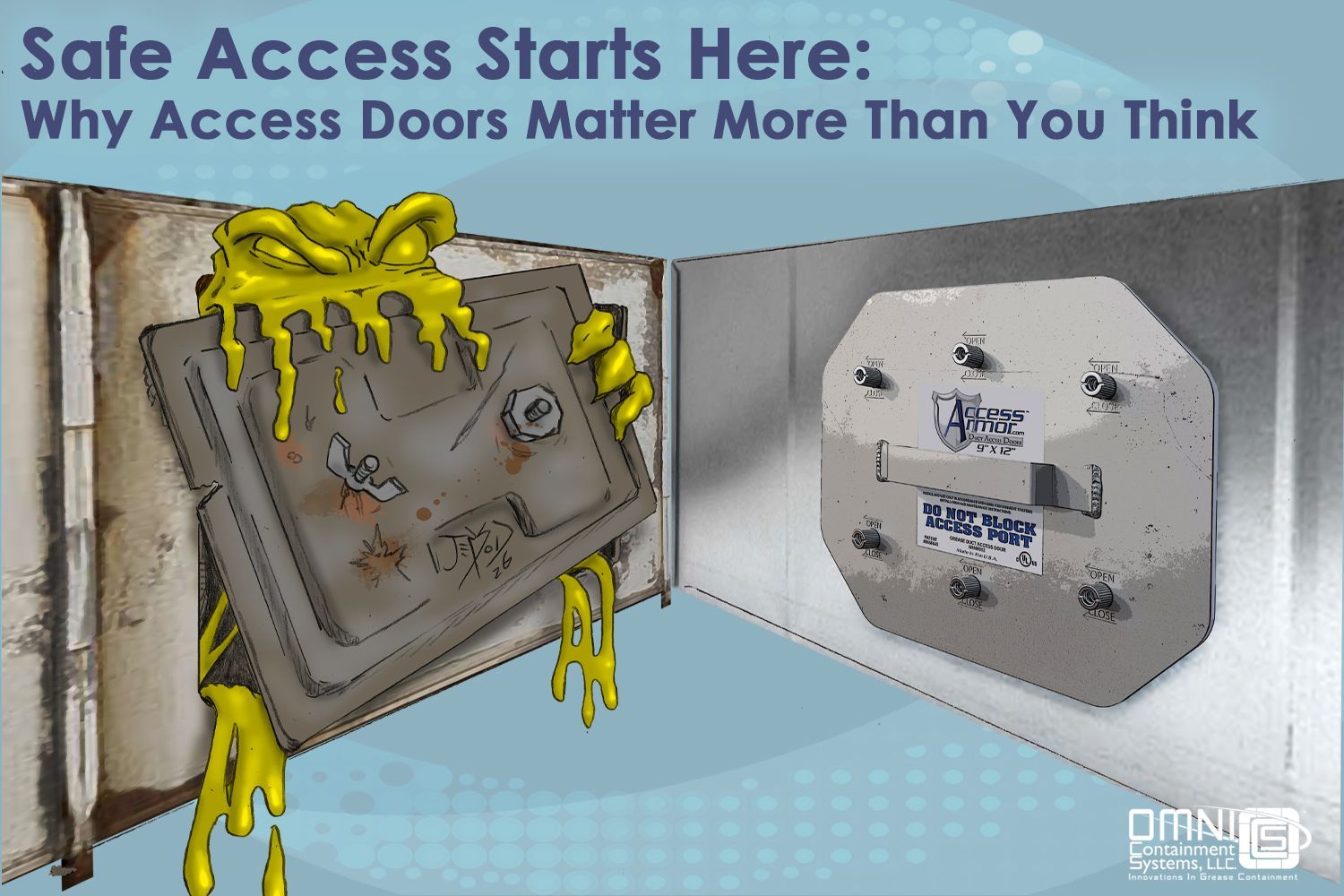
So, let’s bring you back to the story at the beginning of this case study, the 35-foot vertical duct after a short lateral duct. FilterShine Front Range was able to restore this system back into compliance with the Tegras system. FilterShine Front Range added Omni’s Access Armor Duct Access panels in the lower ductwork and ran the MultiPro straight up just shy of the fan. They removed over 55 lbs. of grease from scraping the lower parts and over 150 lbs. of grease on the vertical duct with the Tegras equipment. Shayne stated, “It was pulling off dinner-plate size chunks as the chemical and brushes worked up and down the duct.” This is one of the biggest reasons FilterShine would recommend Tegras; it offers kitchen exhaust cleaners a real solution to complex jobs that have left other companies scratching their heads.
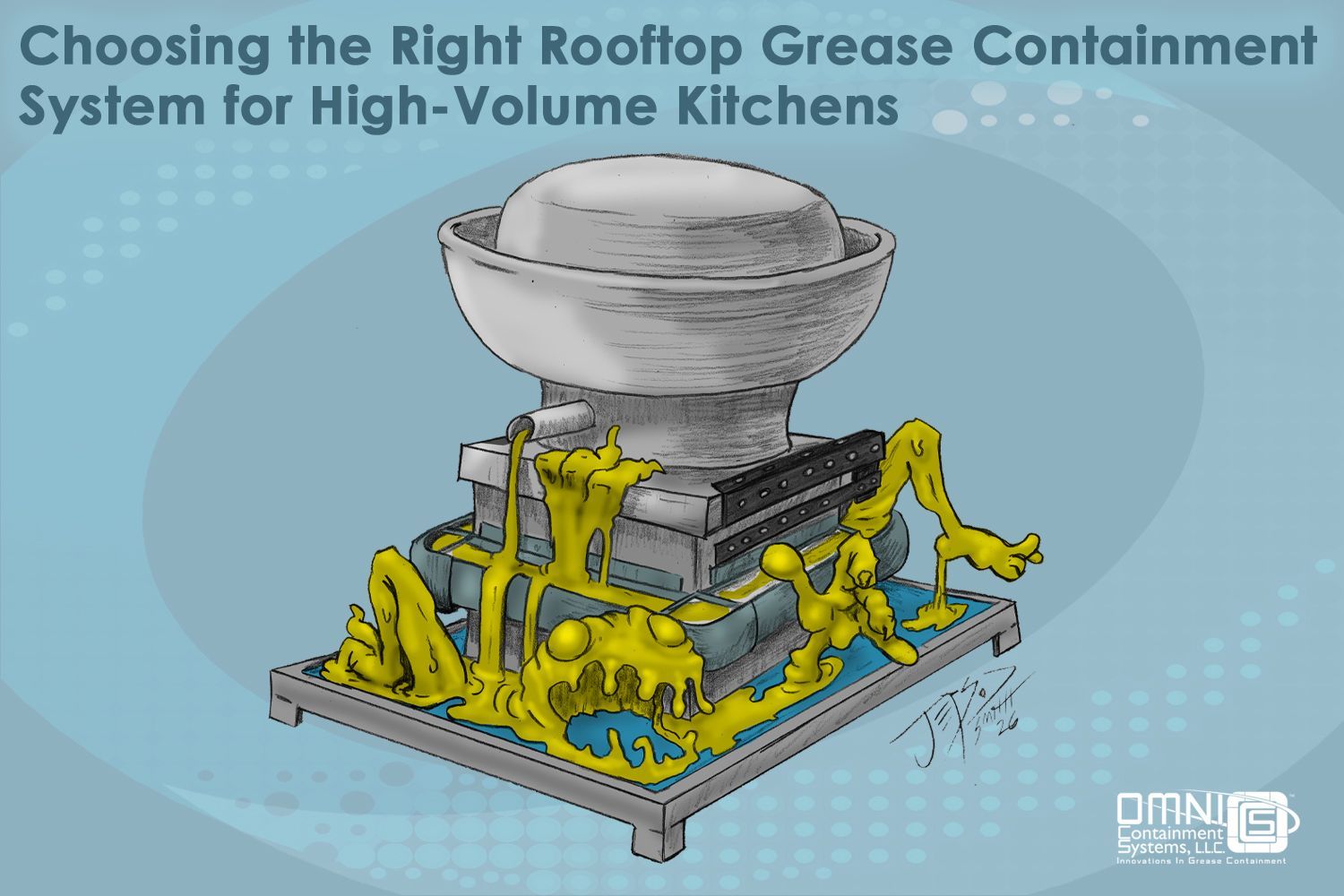
Even in high-volume kitchen exhaust systems, FilterShine Front Range has used the Tegras equipment. One specific job that made the most impact on them was when they restored a high-volume system that had 2-6 inches of heavy grease build-up and a river of grease running through it. The previous KEC had neglected the access panels for six years. FilterShine Front Range fully restored that system in a single night of cleaning without interrupting restaurant operations.
One of the best experiences of the Tegras for Shayne was the ability to test the limits of his equipment, his personal abilities, and the efficiency of his operational systems. He has been able to achieve amazing results with a small crew due to the Tegras System. Shayne states, “Without it, we would have either turned down some of the jobs or would have needed restaurants to close down for days, resulting in tens of thousands in lost revenue.”
FilterShine Front Range is well-known as one of the best in the industry, and with the Tegras System they have been able to further expand on that reputation. Shayne stated, “It has been amazing to get referrals from satisfied customers, even for out-of-state restoration jobs and from other local hood cleaners that know the limits of their own wheelhouse. We have built positive partnerships with colleagues, restaurant owners, and property management companies that care about quality and understand the importance of fire safety.”
Omni Containment Systems is incredibly grateful for our partnership with Shayne Buckley and FilterShine Front Range. We thank him for sharing his Tegras experience with us and appreciate his role in supporting other Tegras equipment owners. He has helped troubleshoot and answer questions for many kitchen exhaust cleaners who are making their transition into the Tegras equipment. We look forward to many years of partnership with FilterShine Front Range!
Omni Containment Systems’ line of kitchen exhaust cleaning innovations is the perfect way to get back more time and money for your company. With the time saved, more restaurants can be cleaned, helping to make your business more money. If you are ready to take your kitchen exhaust cleaning business to the next level, contact an Omni Containment Systems team member. We would be happy to help you choose the perfect innovation to help elevate your business.
Share This Blog Post!